|
Abraham Lincoln Facts
President Abraham Lincoln
1861-1865
(February 12, 1809 - April 15, 1865)
| President Abraham Lincoln |
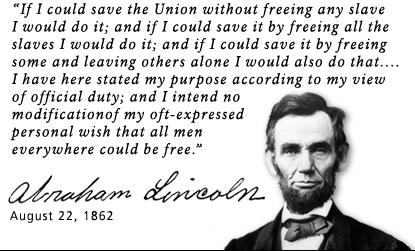
|
| South, States' Rights, Constitution, Supreme Court, Southern Secession, Civil War |
Born: February 12, 1809, in Hodgenville, Hardin County, Kentucky.
Died: April 15, 1865. Lincoln died the morning after being shot at Ford's Theatre in Washington, D.C., by John Wilkes
Booth, an actor.
To the majority of the North, President Abraham Lincoln was a great president, uniter, liberator, and staunch American. To most of the South, however, Lincoln was a tyrant, invader, and he even trampled, trashed, and trumped states' rights and the U.S. Constitution. (Governor John Ellis and Cherokee Declaration of War Against the Union: The Tyrant Abraham
Lincoln.)
| President Abraham Lincoln History |
|
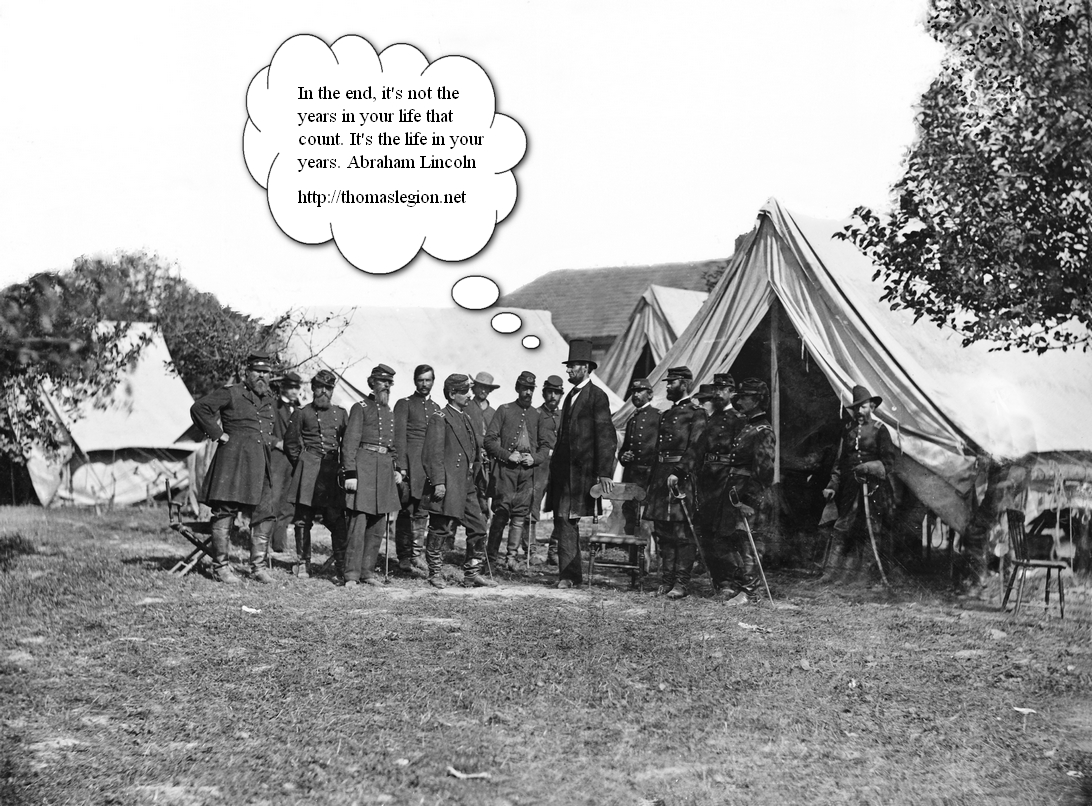
| President Lincoln with Gen. George B. McClellan and group of officers |
Chief Justice Roger B. Taney said publicly that President
Abraham Lincoln's actions were "illegal, criminal and unconstitutional."
History shows that Commander-in-Chief Lincoln was willing
to discard the Constitution in order to preserve the Union. Lincoln was also a rather brutal warrior, ready to deploy
the most advanced and lethal weaponry to win the Civil War. He proudly backed General Ulysses S. Grant against critics who
said he took too many casualties in his relentless attacks on Confederate forces. And he was prepared to see Atlanta and Richmond
and other cities sacked and burned if it would restore the Union more quickly. Under Lincoln, American citizens were
targeted and shelled with the most deadly firepower of the era. Union troops developed and exploded huge mines,
perfected rifled artillery that boasted long range and deadly aim, deployed monstrous ironclad warships and even dabbled in
the use of niter — a sort of primitive napalm — to clean out rebel positions.
President Abraham Lincoln was said to be guilty of the following criminal
acts:
- Violation of the Constitution and his oath of office by invading and waging
war against states that had legally and democratically withdrawn their consent from his government, inaugurating one of the
cruelest wars in recent history.
- Subverting the duly constituted governments of states that had not left the
Union, thereby subverting their constitution right to "republican form of government."
- Raising troops without the approval of Congress and expending funds without
appropriation.
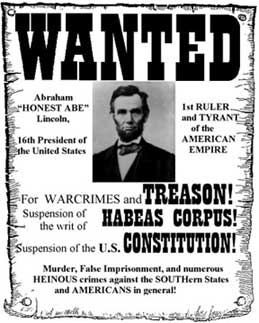
- Suspending the writ of habeas corpus and interfering with the press without
due process, imprisoning thousands of citizens without charge or trial, and closing courts by military force where no hostilities
were occurring.
- Corrupting the currency by manipulations and paper swindles unheard of in
U.S. history.
- Fraud and corruption by appointees and contractors with his knowledge and
connivance.
- Continuing the war by raising ever-larger bodies of troops by conscription
and hiring of foreign mercenaries and refusing to negotiate in good faith for an end to hostilities.
- Confiscation of millions of dollars of civilian property by his agents
in the South, especially cotton, without legal proceedings.
- Waging war against women, children, civilians and civilian property
as the matter of policy (rather than as unavoidably incident to combat), e.g., Sherman's March.
Taney also stated that Lincoln alone was responsible for the bloody
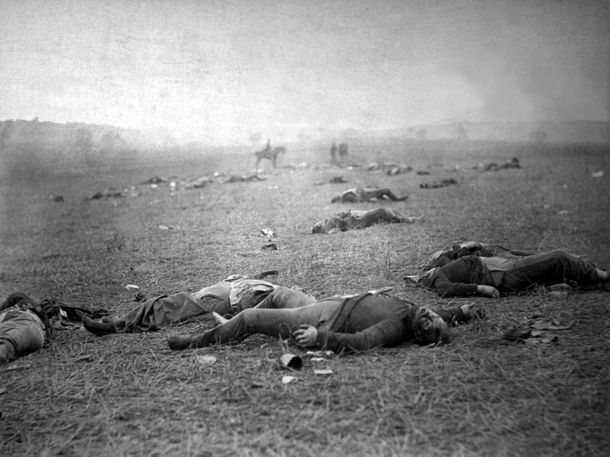
carnage that most refer to as the American Civil War (1861-1865). According to Taney, the Civil War that resulted in 620,000
killed (more than 2% of the US population) was a direct result of Lincoln's actions. Lincoln, a great president? Not even close. A great or even mediocre president would have avoided and prevented said conflict.
Also, a great president would not have totally and completely thrown the Constitution in the trash. Lincoln, consequently, was definitely
the worst U.S. president in history. (What was the Main Cause of the Civil War? A Study of Slavery, States'
Rights, Secession, State and Federal Governments, Constitution, Supreme Court, and President Abraham Lincoln and President Abraham Lincoln and War Powers.)
| President Abraham Lincoln & States' Rights |
|
| President Abraham Lincoln suspends Constitution. |
| President Abraham Lincoln & Southern Secession |
|
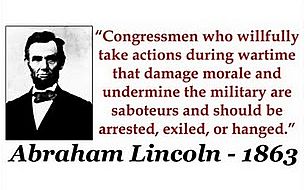
| South Secedes = President Abraham Lincoln = Civil War |
In the 1860 election, without a single Southern electoral vote and with
only 39.8% of the popular vote, Lincoln became the 16th President of the United States.
Almost thirty years before the Civil War, South Carolina threatened to secede
from the Union. Why? Because of High Tariffs and not because of slavery (Nullification Crisis). Later, when the South desired to secede, this was President Lincoln's response to secession, not slavery, in
his First Inaugural Address on March 4, 1861: "No State, upon its own mere motion, can lawfully get out of the Union." Lincoln
was adamantly concerned about secession and not about slavery. (President Abraham Lincoln: Southern States Secede and Secession
of the South History,)
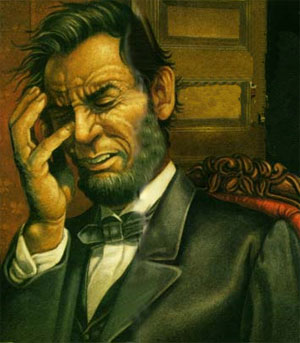
| President Abraham Lincoln and Constitution |
|
| I'm sick and tired of that Constitution! |
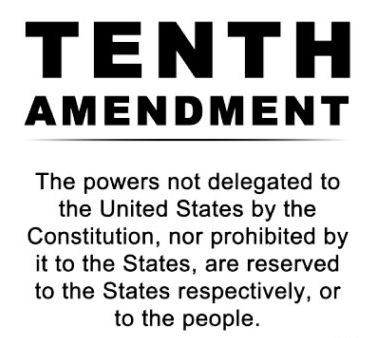
| President & Tyrant Abraham Lincoln |
|
| I really hate this Amendment, too! No States' Rights! |
| President Abraham Lincoln obstructs Supreme Court |
|
| Lincoln's War produced more than 620,000 American dead... |
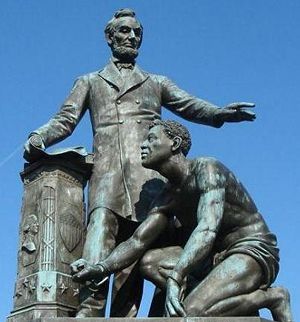
| Father Abraham gives His blessing? |
|
| Honest President Abraham Lincoln? |
President Abraham Lincoln, on August 26, 1863, in a letter to Hon. James C. Conkling, wrote: "I
issued the [Emancipation] proclamation on purpose to aid in saving the Union." Lincoln continues:
"I thought that whatever negroes can be got to do as soldiers, leaves just so much less for
white soldiers to do, in saving the Union. Does it appear otherwise to you?" (President Lincoln, Slaves, Emancipation, Black Colonization and the Black Colony and The Three-Fifths Compromise, aka Three-fifths Clause,)
Lincoln, who had
previously obstructed the U.S. Supreme Court from convening and rendering a decision on secession, merely invoked "freeing the slaves" midway through the conflict as
justification to preserve the Union. As president, Lincoln was completely
and unequivocally pro-Union. So, was the war about freeing the slaves or denying Southern Secession?
(President Abraham Lincoln in
his own words from Civil Rights to States' Rights to Secession and Southern States Secede: Secession of the South History.) In addition, Lincoln unilaterally: declared war without the consent of Congress, suspended
habeas corpus, arrested scores of political opponents and newspaper editors, and deployed troops to New York City to force
conscription on an unwilling populace.
If Lincoln would have allowed Southern Secession, would there have been a Civil War?
| Abraham Lincoln in Casket (Rare Photograph)* |

|
| "Stealing Lincoln's Body" ("Still Shot" of Lincoln dead) (Untouched)* |
"He who lives by the sword shall perish by the sword," Jesus
On Good Friday, April 14, 1865, President Abraham Lincoln was assassinated
at Ford's Theatre in Washington by John Wilkes Booth, an actor, who believed that Lincoln was, among many disparaging
monikers, a "butcher and murderer."
W.E.B. Du Bois**, in The Crisis
magazine in May 1922, wrote that President Lincoln was one huge contradiction: "[President Abraham Lincoln] was big enough
to be inconsistent—cruel, merciful; peace-loving, a fighter; despising Negroes and letting them fight and vote; protecting
slavery and freeing slaves. He was a man—a big, inconsistent, brave man."
| Lincoln and Kennedy |
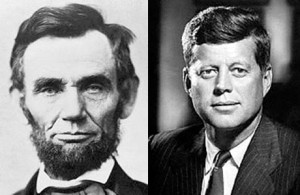
|
| Library of Congress |
Lincoln, Occult, Spiritualism, and Christianity
Lincoln believed in premonitions and the occult. He and Mary had lost little Edward and Willie
at young ages, and they held séances in the White House trying to contact their departed sons. Mrs. Lincoln also attended
séances at the homes of famous mediums. Mr. Lincoln said he was a Christian. He didn’t, however, subscribe to any Christian
denomination, and he never joined a church, didn’t say grace before meals, and spoke on a more spiritual level, rather
than religious. He did read the Bible often though. When asked if he thought the Lord was on the side of the North in the
Civil War, Lincoln responded: “I am not at all concerned about that…But it is my constant anxiety and prayer that
I and this nation should be on the Lord’s side.” (Was Abraham Lincoln a Christian? Lincoln Quotes on Religion, Christianity,
and the Bible)
There are some bizarre coincidences
between Abraham Lincoln and John F. Kennedy: Both were shot in the head on a Friday; Lincoln
was elected to Congress in 1846, Kennedy in 1946; Lincoln’s
successor (Andrew “Johnson”) was born in 1808, Kennedy’s successor (Lyndon B. “Johnson”) was
born in 1908.
**W.E.B. Du Bois (February 23, 1868 – August 27, 1963) was
the first African American to earn a Ph.D. from Harvard University. He was a civil rights activist, public
intellectual, professor of sociology, historian, writer, and editor.
(Continued Below)
Recommended Reading: The Real Lincoln: A New
Look at Abraham Lincoln, His Agenda, and an Unnecessary War. Description:
It hardly seems possible that there is more to say about someone who has been subjected to such minute scrutiny in thousands
of books and articles. Yet, Thomas J. DiLorenzo’s The Real Lincoln
manages to raise fresh and morally probing questions, challenging the image of the martyred 16th president that has been fashioned
carefully in marble and bronze, sentimentalism and myth. Continued below...
In doing so, DiLorenzo does not follow the lead of M. E. Bradford or other Southern agrarians. He writes
primarily not as a defender of the Old South and its institutions, culture, and traditions, but as a libertarian enemy of
the Leviathan state. DiLorenzo holds Lincoln and his war responsible for the triumph of "big government" and the birth of the ubiquitous,
suffocating modern U.S. state. He seeks
to replace the nation’s memory of Lincoln as the “Great Emancipator” with
the record of Lincoln as the “Great Centralizer.”
Advance to:
Recommended Reading: Lincoln
Unmasked: What You're Not Supposed to Know About Dishonest Abe. Description: While many view our 16th president as the nation’s greatest
president and hero, Tom Dilorenzo, through his scholarly research, exposes the many unconstitutional decisions of Abraham
Lincoln. Lincoln Unmasked, a best-seller, reveals that ‘other side’ – the inglorious character
– of the nation’s greatest tyrant and totalitarian. Continued below...
Recommended Reading:
Forced into Glory: Abraham Lincoln's White Dream, by Lerone Bennett.
Description: Beginning with the argument that the Emancipation Proclamation did not actually free African American slaves,
this dissenting view of Lincoln's greatness surveys the president's policies, speeches, and private utterances and concludes
that he had little real interest in abolition. Pointing to Lincoln's support for the fugitive slave laws, his friendship with
slave-owning senator Henry Clay, and conversations in which he entertained the idea of deporting slaves in order to create
an all-white nation, the book, concludes that the president was a racist at heart—and that the tragedies of Reconstruction
and the Jim Crow era were the legacy of his shallow moral vision. Continued below...
About the Author:
Lerone Bennett Jr. is the executive editor emeritus of Ebony magazine and the author of 10 books, including Before the Mayflower,
Great Moments in Black History, Pioneers in Protest, The Shaping of Black America, and What Manner of Man, a biography of
Martin Luther King. He lives in Chicago.
Recommended Reading: Lincoln on Race and Slavery [ILLUSTRATED]
(Hardcover), by Henry Louis Gates, Jr. (Editor, Introduction), Donald Yacovone (Editor). Description: Generations of Americans
have debated the meaning of Abraham Lincoln's views on race and slavery. He issued the Emancipation Proclamation, authorized
the use of black troops during the Civil War, supported a constitutional amendment to outlaw slavery, and eventually advocated
giving the vote to black veterans and to what he referred to as "very intelligent negroes." Continued below...
But he also harbored grave doubts about the intellectual capacity of African
Americans, publicly used the n-word until at least 1862, enjoyed "darky" jokes and black-faced minstrel shows, and long favored
permanent racial segregation and the voluntary "colonization" of freed slaves in Africa, the Caribbean, or South America.
In this book--the first complete collection of Lincoln's important writings on both race and slavery--readers can explore
these contradictions through Lincoln's own words. Acclaimed Harvard scholar and documentary filmmaker Henry Louis Gates, Jr.,
presents the full range of Lincoln's views, gathered from his private letters, speeches, official documents, and even race
jokes, arranged chronologically from the late 1830s to the 1860s. Complete
with definitive texts, rich historical notes, and Gates's original introduction, this book charts the progress of a war within
Lincoln himself. We witness his struggles with conflicting aims and ideas--a hatred of slavery and a belief in the political
equality of all men, but also anti-black prejudices and a determination to preserve the Union even at the cost of preserving
slavery. We also watch the evolution of his racial views, especially in reaction to the heroic fighting of black Union troops.
At turns inspiring and disturbing, Lincoln on Race and Slavery is indispensable
for understanding what Lincoln's views meant for his generation--and what they mean for our own.
Recommended Reading: Lincoln and Douglas: The Debates that Defined America (Simon & Schuster). Description: In 1858, Abraham Lincoln was known as a successful Illinois lawyer who had achieved some prominence in state politics as a leader in the new
Republican Party. Two years later, he was elected president and was on his way to becoming the greatest chief executive in
American history. What carried this one-term congressman from obscurity to fame was the campaign he mounted for the United
States Senate against the country's most formidable politician, Stephen A. Douglas, in the summer and fall of 1858. Lincoln challenged Douglas directly in one of his greatest speeches -- "A house divided against itself
cannot stand" -- and confronted Douglas on the questions of slavery and the inviolability of the Union
in seven fierce debates. As this brilliant narrative by the prize-winning Lincoln scholar Allen
Guelzo dramatizes, Lincoln would emerge a predominant national
figure, the leader of his party, the man who would bear the burden of the national confrontation. Continued below...
Of course,
the great issue between Lincoln and Douglas was slavery. Douglas was the champion of "popular sovereignty," of letting states and territories decide
for themselves whether to legalize slavery. Lincoln drew a
moral line, arguing that slavery was a violation both of natural law and of the principles expressed in the Declaration of
Independence. No majority could ever make slavery right, he argued. Lincoln lost that Senate
race to Douglas, though he came close to toppling the "Little Giant," whom almost everyone
thought was unbeatable. Guelzo's Lincoln and Douglas brings alive their debates and this whole year of campaigns and underscores
their centrality in the greatest conflict in American history. The encounters between Lincoln and Douglas engage a key question
in American political life: What is democracy's purpose? Is it to satisfy the desires of the majority? Or is it to achieve
a just and moral public order? These were the real questions in 1858 that led to the Civil War. They remain questions for
Americans today.
Recommended Reading: Lincoln and Chief Justice Taney: Slavery, Secession, and the President's War Powers, by James F. Simon (Simon & Schuster). Publishers Weekly: This surprisingly taut and gripping book by NYU law professor Simon (What Kind of Nation)
examines the limits of presidential prerogative during the Civil War. Lincoln and Supreme Court Chief Justice Roger Taney
saw eye to eye on certain matters; both, for example, disliked slavery. But beginning in 1857, when Lincoln criticized Taney's decision in the Dred Scott case, the pair began to spar. They
diverged further once Lincoln became president when Taney insisted that secession was constitutional
and preferable to bloodshed, and blamed the Civil War on Lincoln.
Continued below...
In 1861, Taney
argued that Lincoln's suspension of habeas corpus was illegal. This holding was, Simon argues, "a clarion
call for the president to respect the civil liberties of American citizens." In an 1862 group of cases, Taney joined a minority opinion that Lincoln
lacked the authority to order the seizure of Southern ships. Had Taney had the chance, suggests Simon, he would have declared
the Emancipation Proclamation unconstitutional; he and Lincoln agreed that the Constitution left slavery up to individual
states, but Lincoln argued that the president's war powers
trumped states' rights. Simon's focus on Lincoln and Taney makes for a dramatic, charged narrative—and the focus on
presidential war powers makes this historical study extremely timely.
|

 .)
.)